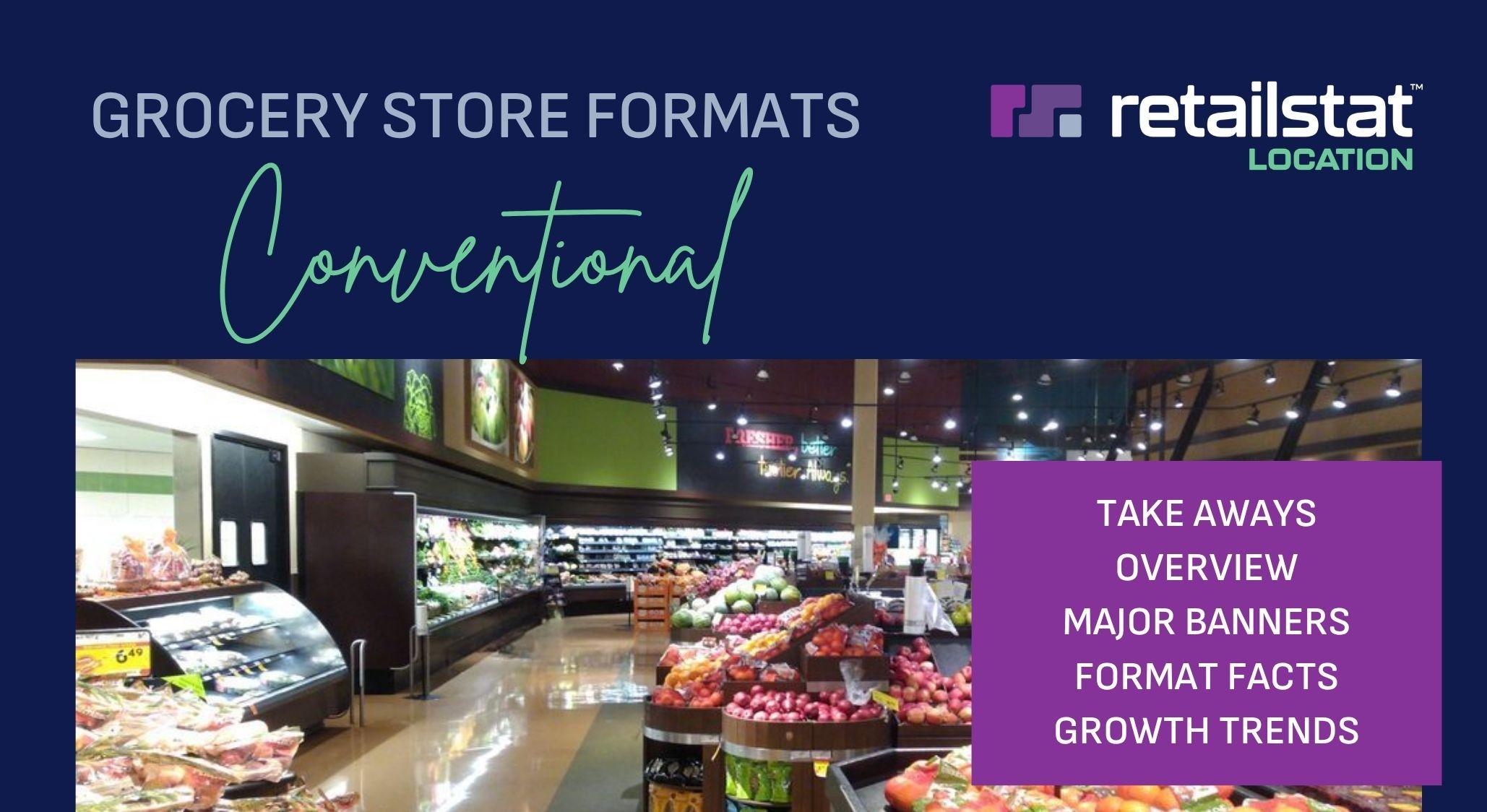
Conventional Grocery Stores: Market Leadership, Performance & Growth Trends
Why do Conventional supermarkets remain the foundation of the U.S. grocery industry despite evolving consumer preferences and increasing competition from specialized retail formats?
This report explores the Conventional grocery format, the largest segment in the industry, representing approximately half of all grocery stores nationwide. Defined by broad product assortments, full-service departments, and familiar shopping experiences, Conventional supermarkets continue to serve as the backbone of grocery retail while adapting to changing consumer expectations and regional market dynamics.
From Albertsons, Kroger, Publix, and Safeway to Food Lion, Stop & Shop, and Giant, the report examines the leading banners shaping the category, regional performance differences, store productivity, and future expansion activity. It also highlights where growth is expected, how store formats vary across the country, and the factors influencing long-term competitiveness.
While Conventional supermarkets remain the most established grocery format, success increasingly depends on balancing operational efficiency with evolving customer expectations, competitive pricing, and differentiated shopping experiences.
But here's the catch —
As Discount, Quality/Service, and other specialized grocery formats continue to evolve, Conventional grocers must compete on more than scale alone. The ability to adapt to local markets while maintaining operational consistency is becoming a key differentiator in an increasingly competitive grocery landscape.
Can Conventional supermarkets continue to lead the industry as grocery retail becomes more specialized and consumer expectations continue to evolve?