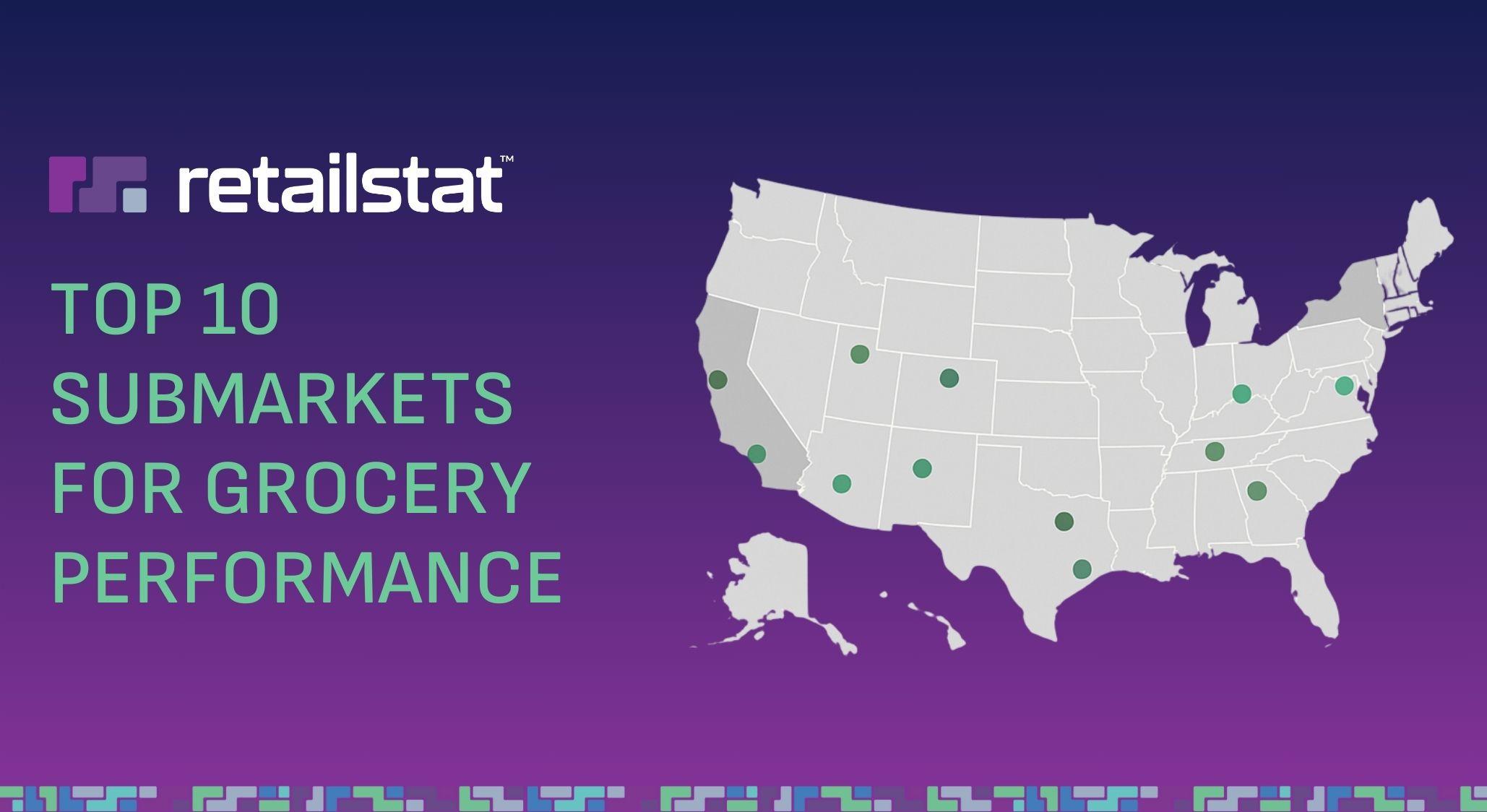
Top Grocery Submarkets: Sales Performance, Regional Strength & Site Selection Insights
What makes certain grocery submarkets outperform larger, denser, and more established retail markets?
This report examines 12 high-performing grocery submarkets across 10 U.S. markets, using sales per square foot to identify areas where store productivity significantly exceeds national benchmarks. By breaking large metros into more targeted submarkets, RetailStat’s analysis provides a more granular view of grocery performance and helps uncover where retailers are achieving stronger results.
From Texas submarkets influenced by H-E-B’s strength to high-performing areas in Florida, New Jersey, California, Utah, and Washington, the report highlights how regional operators, store density, market positioning, and local demand patterns contribute to elevated grocery sales productivity.
While major metropolitan areas often attract the most attention, the strongest grocery performance can emerge in smaller metros, suburban corridors, and strategically positioned trade areas where competition, store quality, and consumer demand align.
But here’s the catch —
High-income density alone does not guarantee superior grocery performance. As store count increases and competition intensifies, underperforming locations can dilute market averages, making submarket-level analysis critical for understanding where true opportunity exists.
Which grocery submarkets are outperforming national benchmarks—and what can their performance reveal about site selection, competition, and future growth opportunities?